You spend hundreds on serums, foundations, brushes—but your makeup still looks off. Maybe it’s patchy under the eyes. Or your contour disappears by noon. Here’s the kicker: your technique might be flawless, but without the right lighting and angle, even luxury products fall flat. The fix isn’t another palette. It’s a single, strategic makeup application tool most pros keep within arm’s reach.
Why Your Current Setup Sabotages Precision
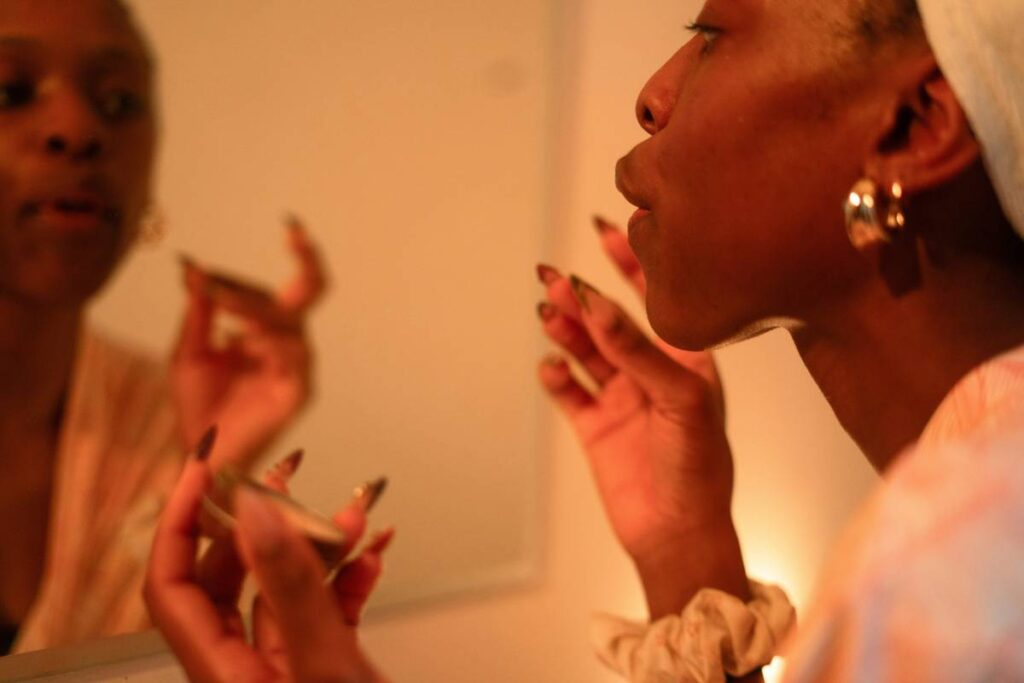
Mirror selfies trick you. Bathroom vanity lights cast shadows that hide imperfections until you’re under daylight—and suddenly, your concealer is three shades too light. Natural window light? Great—if you only do your makeup at 10 a.m. in spring.
And don’t get me started on magnification myths. Too much zoom distorts proportions. You blend for five minutes thinking you’ve perfected your cut crease—then step back and realize you’ve painted half your forehead.
How to Use a Makeup Mirror Like a Pro (Step-by-Step)
This isn’t about buying the fanciest ring-light mirror. It’s about control. Positioning. Context. Follow this sequence:
1. Assess Ambient Light First
Before you touch product, observe how light hits your face in your actual environment—office, car, evening event. Your beauty mirror with adjustable brightness should mimic that, not override it.
2. Choose Magnification Strategically
Use 1x for foundation and blush. Reserve 5x–7x only for tweezing, lining, or spot-concealing. Never apply base makeup under high zoom—it inflates minor flaws into panic zones.
3. Angle Matters More Than Brightness
Tilt your mirror downward slightly. This replicates overhead lighting (like sunlight) and reveals texture issues flat mirrors miss. Bonus: it forces you to look up—opening eyelids naturally for precise liner work.
| Mirror Type | Best For | Pitfall to Avoid | Price Range |
|---|---|---|---|
| Fixed LED Vanity Mirror | Daily routine in consistent lighting | Unadjustable color temperature = yellow/orange cast | $40–$120 |
| Adjustable Magnification Mirror | Detail work (brows, eyeliner, spot coverage) | Overusing high zoom for full-face application | $25–$80 |
| Tri-Light Smart Mirror | Pro-level color accuracy across environments | Bulkiness; requires outlet/power | $100–$250 |
| Compact Travel Mirror | Touch-ups on-the-go | Poor reflectivity = misleading finish | $10–$35 |
The Industry Secret: Mirrors Are Calibration Devices
Top makeup artists don’t just “see better” with their mirrors—they use them as calibration tools. Think about it: if you test foundation under warm hotel lighting, then walk into a cool-toned gallery opening, your skin will look ashy or orange. Pros carry a small, neutral-white LED mirror specifically to preview how makeup translates across spectrums. Some even calibrate phone cameras against their mirror’s white balance before sending client photos.
Here’s the reality: your makeup application tool isn’t passive. It’s an active filter between intention and outcome. And—ironically—most drugstore mirrors are calibrated for sales, not accuracy. They make every shade look dewy and even… until you leave the store.
Frequently Asked Questions
What makes a mirror a true makeup application tool?
True makeup application tools offer daylight-balanced lighting (5000K–6500K), adjustable magnification, and non-distorting glass—not just a shiny surface.
Can I use my phone flashlight instead of a beauty mirror?
No. Phone flash creates harsh, directional light that hides texture and exaggerates shine. It’s the opposite of what you need for seamless blending.
How often should I clean my makeup mirror?
Weekly. Oil splatter, setting spray residue, and dust create micro-film that subtly distorts reflection—leading to over-application or missed spots.